Kookarucha Solver
A GTO solver and trainer for Kookarucha — the double-flop PLO ante game where every seat gets one decision: pot or fold.
The game
Two flops, four to six cards
2–9 players each post an ante and get 4, 5 or 6 hole cards. Two 3-card flops are dealt before anyone acts.
One decision: pot or fold
In seat order, each player pots a fixed bet (players × ante by default) or folds, seeing what earlier seats did. If everyone folds, the last seat wins the antes.
Half the pot per board
Each flop runs out its own turn and river, and each board pays half the pot to the best Omaha high hand — exactly 2 hole cards plus 3 from the board.
Every hand, both boards at once
The matrix groups all 163,185 four-card hands by what they make on Board 1 and Board 2. Each cell shows how often the seat pots (red) or folds (blue), and a click lists every hand in it with its EV.
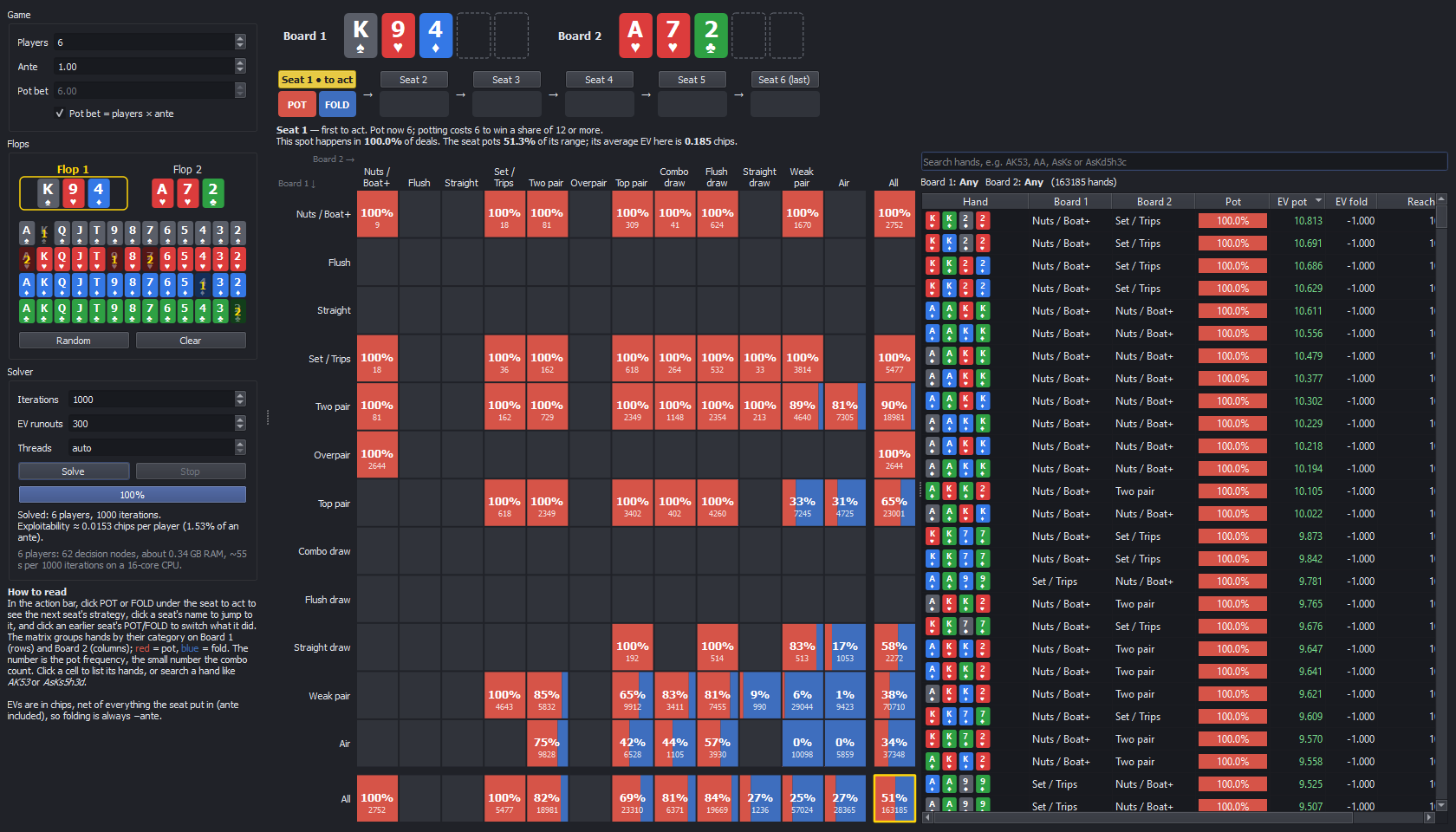
Walk the action seat by seat
Click POT or FOLD under any seat to see how the next seat should respond — every seat after every combination of earlier actions is solved.
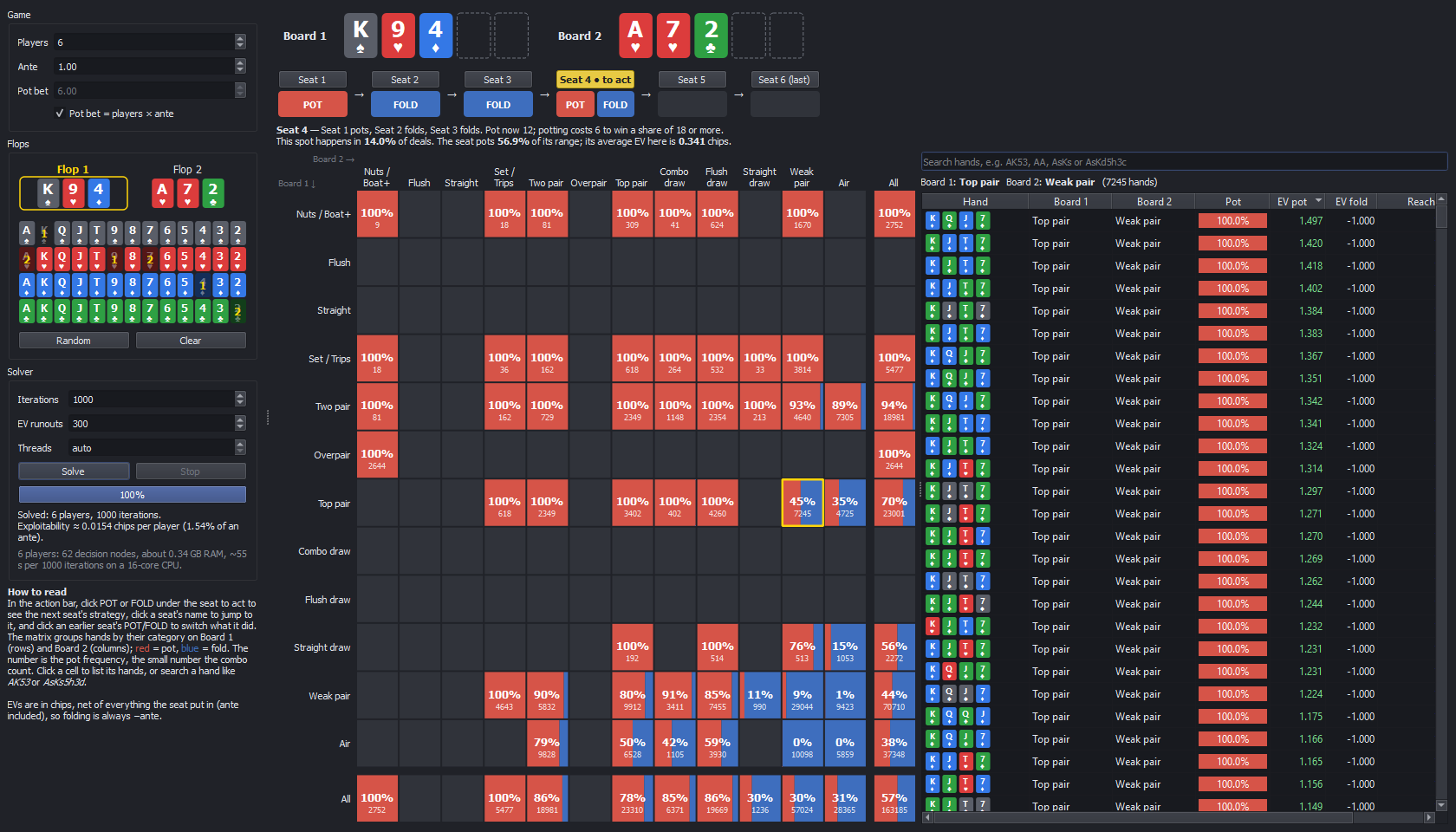
Linear CFR with exact card removal against each opponent. A 6-player four-card solve takes about a minute on a 16-core CPU; 9 players about 8 minutes and 3 GB of RAM.
Five or six hole cards, millions of hands
Switch hole cards to 5 or 6 and the same engine solves the big-hand variants — all 1,370,754 five-card or 9,366,819 six-card hands grouped in the same matrix, every seat and every earlier action still covered.
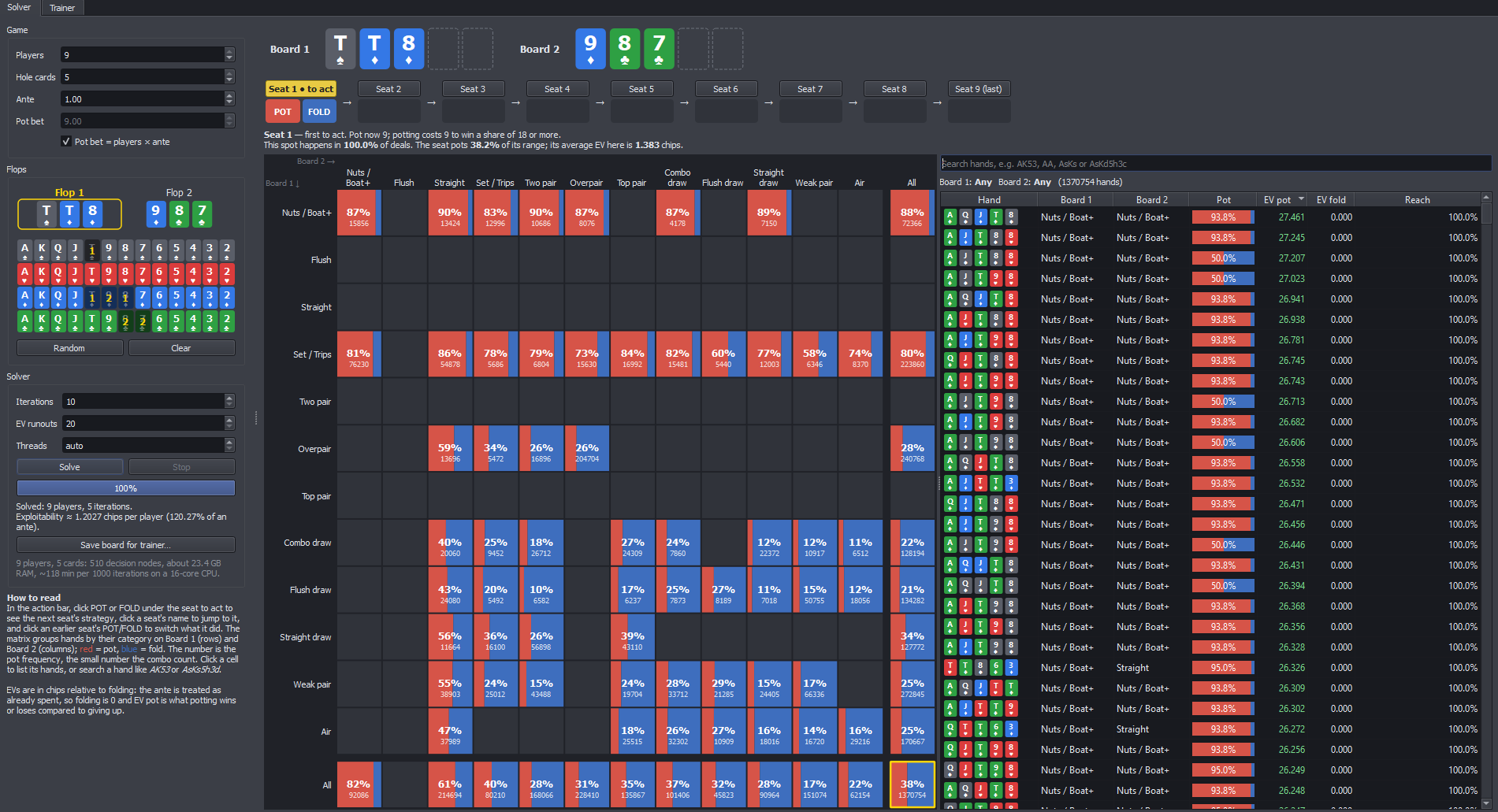
Big-hand solves are heavy — a 9-player five-card solve needs about 23 GB of RAM, and six-card games (up to 7 players) solve for hours. That's what the queue is for.
Queue solves overnight
Snapshot setups into the job queue — or roll a batch of random boards in one click — pick an output folder and press Start. Jobs solve one at a time into board files that reopen in the solver and feed the trainer; Pause parks the running solve, and the queue survives restarts.
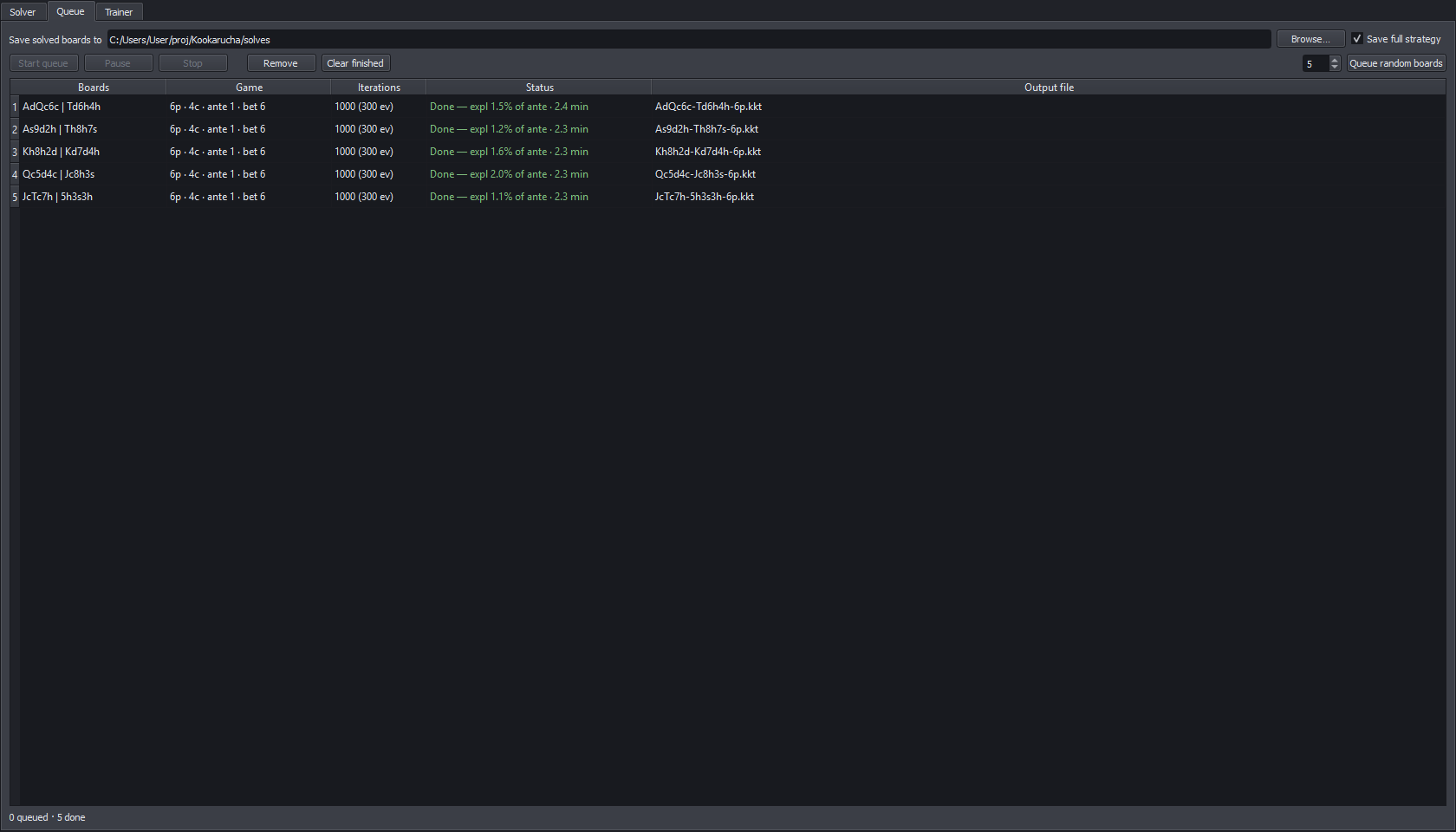
Train against the solution
Save solved boards to the trainer — or group them into named spots with the exact starting sequences to drill — then answer random hands: pot or fold. Every answer is graded against the equilibrium, with your accuracy and EV lost tracked in antes.
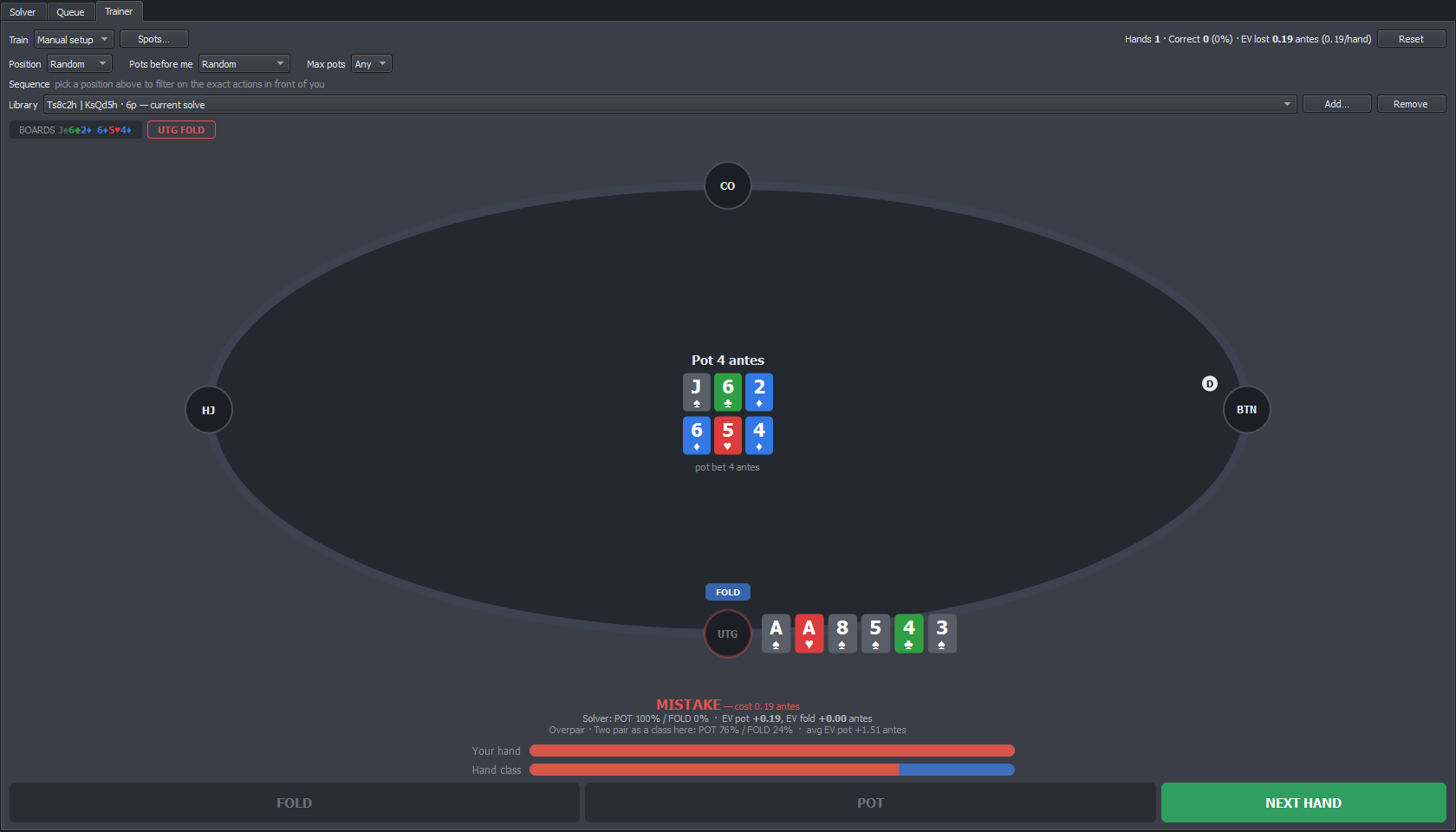
After each answer the trainer names your hand's class on both boards and draws the solver's pot-or-fold split as red and blue bars — for your exact hand and for its whole class.
Want beta access?
Built by Henry, LA poker pro.
Requires Windows 10 or 11.